
The best AI SEO keyword research tool depends on the workflow: Semrush suits broad SEO intelligence, Ahrefs suits backlink-informed research, SE Ranking suits research paired with rank monitoring, and Keyword Tool suits autocomplete discovery. Choose by data coverage, workflow and total cost rather than the AI label, then check every suggestion against live SERPs.
A generated keyword list reads well and proves little. Plausible phrases carry no evidence of demand, and nothing in them shows whether a site can compete for the result. Google Search Central says AI Overviews and AI Mode rest on the same foundational requirements as Google Search, so no separate keyword system exists to chase. The comparison below separates what each product measures from what it only suggests, so budget goes to evidence first and automation second.
Table of Contents
- AI SEO keyword research tool: Criteria for choosing one
- Semrush: Best for marketers managing broad SEO campaigns
- Ahrefs: Best for teams assessing backlink competition
- SE Ranking: Best for teams combining research and rank tracking
- TrendGap: Find demand and how hard it is to win
- Keyword Tool: Best for marketers finding long-tail questions
- Why Surfer SEO and standalone AI assistants missed the shortlist
- Which option fits your budget and workflow?
- How do you validate AI keyword ideas before commissioning content?
AI SEO keyword research tool: Criteria for choosing one
Before choosing an AI keyword tool, compare the quality and freshness of its keyword data, its location settings, how it handles intent and grouping, what it exports, and what the full plan costs. Eight criteria drive the comparison below:
- Keyword-data coverage: search volume, keyword difficulty and CPC come from a database with a documented definition.
- Location settings: country and language can be set per search.
- SERP freshness: the SERP analysis behind each score is recent.
- Search intent: labels can be checked against the live results.
- Keyword clustering: groups merge queries that share one results page.
- Competitor analysis: rival domains and ranking pages are visible.
- Exports and API access: data leaves the tool without manual copying.
- Total cost: plan, billing period, seats and usage limits.
AI belongs in the interpretation layer. A 2026 SPIRITT comparison describes a two-stage workflow: AI for ideation and clustering, then conventional volume, difficulty and SERP data for validation. A generated phrase with no database figure behind it is a hypothesis. A metric such as organic click potential is only useful if the vendor documents how it is calculated.
Three product types get blurred in roundups. Keyword research finds and sizes demand, content optimization shapes the page, and AI-visibility monitoring tracks mentions in generated answers. The SaaS keyword research guide covers how that first job differs for software businesses.
This is a source-based comparison built on vendor pages such as SE Ranking's product description, which lists volume, difficulty, intent, CPC and trends. It is not a hands-on performance test, and vendor feature labels are treated as claims to verify.
Semrush: Best for marketers managing broad SEO campaigns
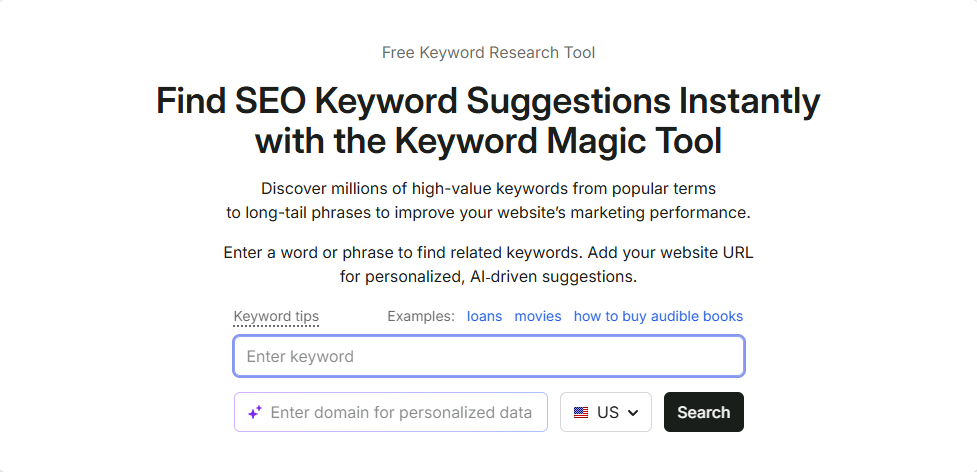
Semrush is the most fitting general-purpose pick on the documented scope when one platform has to cover keyword discovery, intent, grouping, competitor research and wider visibility work. Per Semrush's Keyword Magic Tool page, the product ecosystem pairs keyword research with competitor and visibility functions. That is a description of scope. It is not a measured claim of better data than Ahrefs or SE Ranking.
A workable Keyword Magic Tool workflow runs in six steps:
- Enter one seed topic.
- Set the target country and language before reading any metric.
- Filter by search intent, so informational queries don't crowd out commercial ones.
- Filter by keyword difficulty, and keep a band the site can realistically compete in.
- Open the SERP for each remaining candidate and inspect the ranking pages.
- Export the shortlist with market and date recorded beside it.
Run a keyword gap comparison against two or three rivals afterwards, to catch terms competitors rank for and the site doesn't.
Volume, difficulty, grouping, SERP lists and competitor research are database functions. Any generated suggestions or AI-written summaries sit on top, and the research does not document which plans include them. Treat them as hypotheses until the database figures confirm them.
Drawback: a broad suite is poor value for someone who needs occasional keyword suggestions. Price and limits also need checking on Semrush's own pricing page, because third-party comparisons disagree by billing cycle, plan and region.
Ahrefs: Best for teams assessing backlink competition
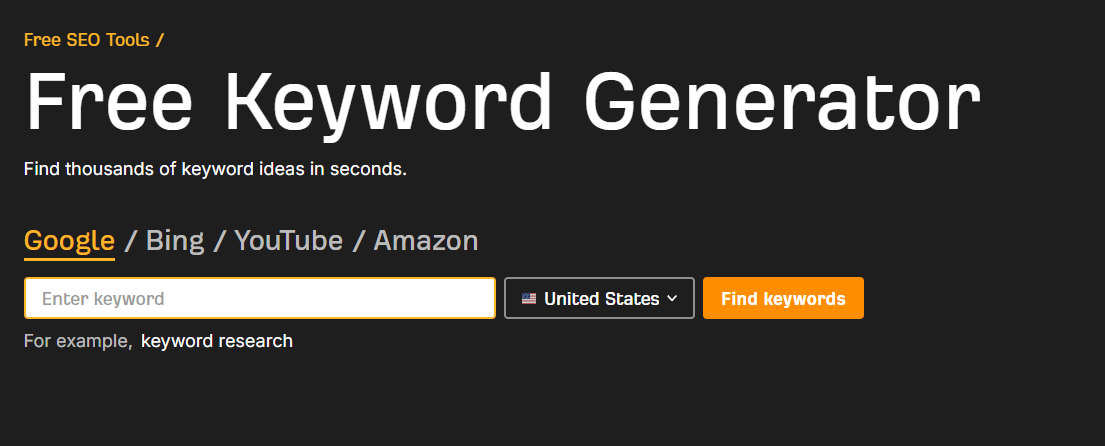
Ahrefs suits teams that need to judge whether a page can realistically rank, because its keyword product sits beside backlink and SERP analysis. Ahrefs describes Keywords Explorer as a research product that combines keyword ideas with SERP and backlink-related data. That is the vendor's description of its own product, and it fits teams whose real question is competition rather than ideas.
A difficulty score compresses a ranking page's strength into one number. The pages behind the number show whether the score means anything for a given site. A GUI workflow keeps that evidence in view:
- Enter a seed keyword and set the target country.
- Review the keyword ideas, and use the parent topic to merge close variants into one target.
- Open the SERP overview for each candidate and read the ranking pages.
- Check each ranking page's backlink profile, and note whether a few strong links or a broad spread props it up.
- Keep keywords where the competing pages look beatable and the intent matches the page the site would publish.
- Record the market, date and reasoning beside every keyword kept.
That last step makes the shortlist defensible: each entry carries evidence a colleague can reopen.
Drawback: the backlink and SERP depth is overhead for anyone who only wants ideation or a lightweight content-planning assistant. Plan cost, usage allowances and platform coverage should be confirmed on Ahrefs' own pricing page, not copied from third-party roundups.
SE Ranking: Best for teams combining research and rank tracking
SE Ranking suits teams that want keyword research and ongoing position monitoring in a single product suite. SE Ranking's product page presents keyword research next to rank monitoring, and that is the vendor's own positioning. The appeal is continuity. A keyword approved in research moves into tracking under the same market settings, with no second tool and no re-entry.
A workflow that uses that continuity:
- Select the target market first, the United States for a US-facing site, because volume and difficulty change by location.
- Review volume, difficulty, intent, CPC, historical trends and SERP data for each candidate.
- Drop keywords whose SERP intent does not match the page the site would publish.
- Add only the approved targets to rank tracking, in the same market.
Ordinary rank tracking records where a page appears for a keyword in a chosen location. AI visibility monitoring is a separate measurement: whether a brand appears in AI-generated answers. The research behind this comparison does not carry SE Ranking's AI-monitoring availability, coverage or plan requirements, so those need confirming on the vendor's feature and pricing pages before any purchase.
The research also gives no like-for-like price comparison, so SE Ranking can't be called the cheapest option here.
Drawback: teams already committed to another rank tracker may pay for overlapping functions.
Try it on your own idea
The idea evaluator gives you a first opinion on your idea: a score, risks, opportunities and next steps. It comes with every plan.
TrendGap: Find demand and how hard it is to win
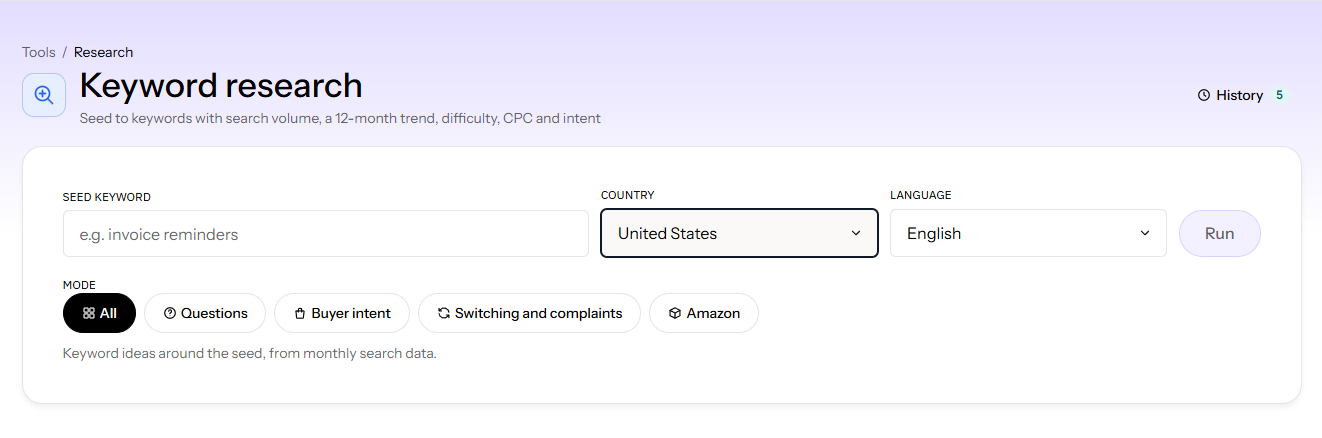
TrendGap fits founders who need to establish whether a problem has real demand before they decide which keywords to chase. Best for: early-stage founders and product marketers deciding what to build or write about, before a keyword database enters the picture.
A disclosure belongs here. TrendGap is the product of the company that publishes this article, so what follows is the maker's positioning and has had no independent audit. The research behind this comparison carries no TrendGap metrics, database size or pricing, and none are stated.
The positioning is clear enough to judge. TrendGap's starting point is public complaints and the evidence behind each idea, which helps founders find product gaps, and keywords come second. That order suits a founder whose open question is "does anyone need this?" more than "which phrase has volume?". The site's demand and keywords documentation is the place to check how the product reads demand and which data sits behind it.
A sensible sequence:
- Start from the problem and the people reporting it, and record what they say they are trying to do.
- Convert that problem into candidate search phrases.
- Check how hard those phrases are to win in a dedicated keyword research tool, using the ranking pages and backlink evidence described in the earlier picks.
Drawback: TrendGap is built for finding and checking demand, which is narrower than the full keyword workflow. A team that needs historical volume series, backlink comparisons or ongoing rank tracking still needs one of the suites above.
Keyword Tool: Best for marketers finding long-tail questions
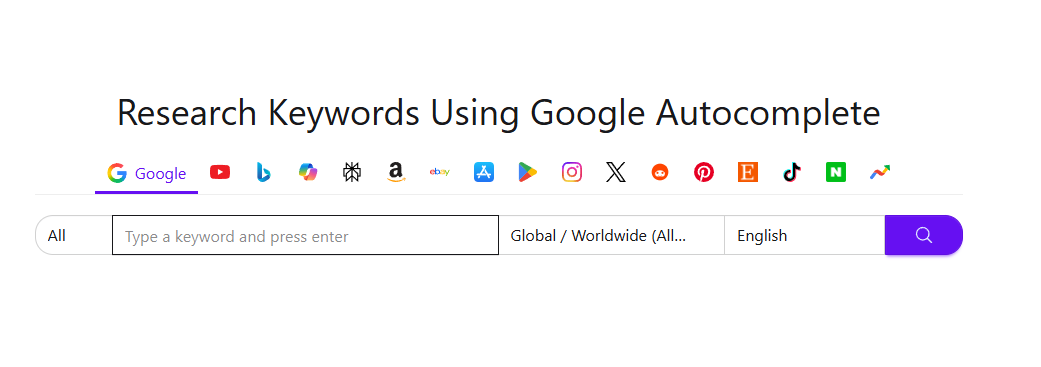
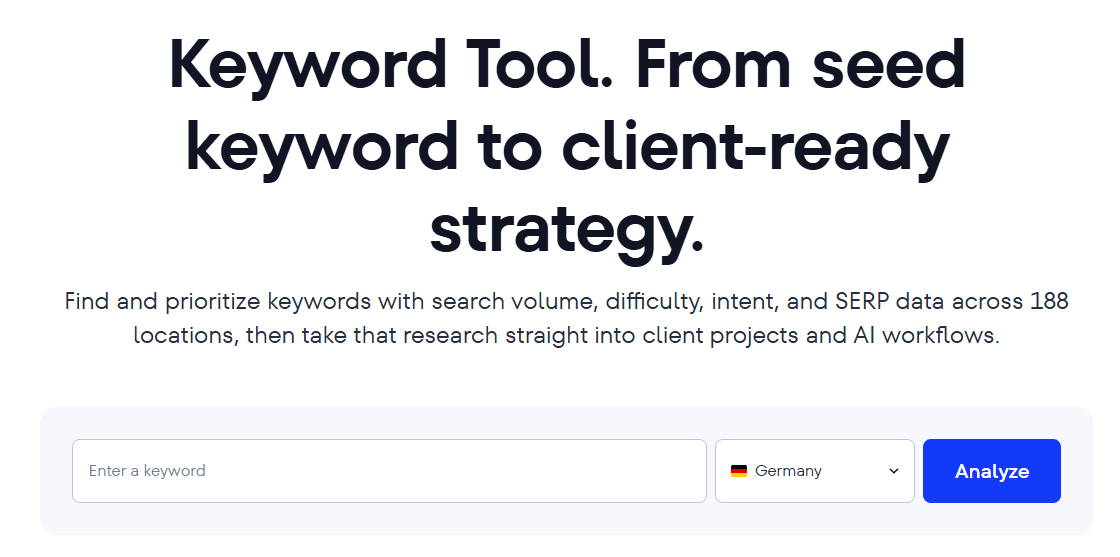
Keyword Tool is an autocomplete-led discovery option for collecting question and long-tail phrases, and it does not replace a full SEO intelligence suite. Its maker positions it for variations across search and social platforms, per the Keyword Tool site. The research behind this comparison verifies no AI functionality in it, so its suggestions come from autocomplete. It earns a place because most of the work it does comes before validation.
A workable sequence:
- Enter one seed topic.
- Pick the platform to pull from.
- Set the language and the target market.
- Collect the questions and long-tail keywords returned.
- Export the list, remove duplicates, and take it into a metrics source.
Drawback: autocomplete shows what people type and says nothing about how many search for it or whether a site can rank. Search volume, search intent and ranking difficulty have to come from another source, such as Google Search Console or one of the suites above. TrendGap's page on keyword monitors, source scans and pain clusters pain clusters describes a separate way to watch for keyword signals. Free discovery tools suit brainstorming and small projects. They are weaker where repeatable historical data, competitor analysis, rank tracking, bulk exports or documented limits matter. The research carries no verified free-versus-paid allowances for Keyword Tool, so check the vendor's plan page before relying on exports.
Why Surfer SEO and standalone AI assistants missed the shortlist
Surfer SEO and standalone ChatGPT were left out because this comparison covers one buying task, research before content, and neither product is built primarily for that job.
Surfer describes a content workflow built around a Content Editor with live SEO and AI Search scores, AI writing, keyword research, a Topical Map and Content Audit. Keyword research is one feature among several. It suits a team that already has a topic cluster and needs a content brief and on-page editing.
ChatGPT can brainstorm seed topics, expand questions, classify intent and turn raw exports into clusters. It cannot reliably replace a keyword database, live SERP analysis, backlink data or first-party performance data unless it is connected to those sources. One workflow shared in a Reddit thread on r/SaaS used AI for discovery and Google Search Console plus the Ahrefs API for metrics. It works well as the keyword clustering step after export.
Which option fits your budget and workflow?
Free discovery sources are good enough for a first pass at ideas, but not for deciding which pages to commission. The table below compares the four main picks; TrendGap, the publisher's own product, is a disclosed extra outside it. Entry costs are not filled in: the research holds no vendor-verified price, and third-party pages disagree, so each cost cell lists what to check on the vendor's own pricing page.
Tool Best-fit buyer Research strength Practical limitation Entry cost: check on vendor page
Semrush Marketers running broad campaigns Discovery, intent, grouping, competitor research Poor value for occasional lookups Users, exports, AI-feature access
Ahrefs Teams judging ranking feasibility Keyword ideas beside SERP and backlink data Overhead for ideation-only use Users, usage allowances, platform coverage
SE Ranking Teams that also track positions Location-specific metrics plus monitoring Overlaps with an existing tracker Tracked keywords, separate AI-monitoring access
Keyword Tool Marketers collecting long-tail questions Autocomplete suggestions No demand or competition evidence Free versus paid limits, export access
Record each price with its billing period and currency on the day of purchase.
A low-cost route needs three parts. An AI assistant or autocomplete source supplies candidate phrases. Google Search Console supplies first-party query data for a site that already has impressions. Live SERPs then show whether the intent and page types fit.
Search Console is not a market-wide volume source. It reports queries where the site already appeared, so it says nothing about demand the site has never reached.
TrendGap's metric coverage and pricing sit outside the verified figures in this comparison, so its own documentation is the place to check what it covers.
How do you validate AI keyword ideas before commissioning content?

Run one business topic and one target market through every shortlisted tool, and treat each AI suggestion as a candidate until a database metric and a live SERP both support it. AI can generate and organise ideas. It should never supply volumes or difficulty scores. TrendGap's documentation on Keyword, SEO and website tools lists what that product covers, a useful reference when running the same checks elsewhere.
- Generate candidate phrases from the same seed in each tool.
- Inspect metric provenance: the database behind each number, its location setting, its date, and how it defines volume and difficulty. Reject any figure without a source.
- Open the live SERP for each phrase and note the intent and the page types ranking, such as guides, product pages or forum threads.
- Group queries that genuinely overlap. Separate pages for one underlying query invite keyword cannibalization.
- Pick a primary topic with clear topical relevance to the business and competition the site can meet.
- Write the content brief, then track impressions, clicks and rankings in Google Search Console after publication.
Keep the source, market and metric definition beside every decision.
AI keyword tools can surface questions, entities and topics that support comprehensive content, but none guarantees a place in an AI Overview. Google Search Central says AI Overviews and AI Mode rest on the same foundations as Google Search: crawlability, indexability and eligibility for ordinary features. Its documentation does not describe a special "AI Overview keyword." A page that cannot be crawled or indexed is out before any keyword choice matters.

About the author
Ilir Neziri
CEO · Growth & SEO at TrendGap; leads SEO, content, and marketing strategy.
Ilir Neziri leads growth, SEO, content, and marketing strategy at TrendGap. His focus is helping founders find product gaps, with public complaints and the evidence behind each idea as the starting point.